
Leadership Disposition #9: To promote each student’s academic success and well-being, effective educational leaders demonstrate a work ethic required for high levels of organizational performance.
This course gave a high-level overview of the managerial functions of a school leader and presented research-based strategies for ensuring the effective use of school resources, including the integration of technology and utilization of data to drive decision-making. During the course, I analyzed the impact of policy and legislation on school planning as well as the innovative potentials for improvement in my own school.

My Leadership Goal: At the beginning of the year, I was tasked with leading the attendance team. I knew that there was information coming from a lot of different sources and that this team needed to be relevant to almost every leadership function in the school. Therefore, my goal was to operationalize our network’s Qualtrics and Google Sheets data system to track instruction, culture, and enrollment during Strong Start (Weeks 1–6 of the school year) by facilitating 3 bi-weekly data reviews with my leadership team. We will document at least 3 data-driven administrative decisions to support a healthy start to the school year.
Summary of Achievements: I successfully achieved this goal, facilitating the 3 bi-weekly data reviews and documenting 3 data-driven administrative decisions (e.g., reallocating advisor outreach lists, adjusting 10-day enrollment verification protocols, and deploying cross-functional staff to morning arrival doors). I accomplished this by setting a distinct cadence for the first 10 days of school versus the rest of the school year, allowing us to distinguish early between enrollment and attendance questions to create a “network of systems” (Strike et al., 2019, p. 123) that I could manage. Strike et al. (2019) remind us of the importance of compiling data in an easily digestible format (p. 66). Therefore, I started the year with a meeting on how to read and analyze attendance data so that when student data arrived, the team knew exactly what to examine. This was critical because our meeting times were brief, requiring us to maximize efficiency since “time management is core to effective management” (Strike et al., 2019, p. 71). Executing these meetings quickly and effectively ensured consistent attendance from high-visibility leaders. I then ran daily attendance meetings for the first 10 days to catch all students, which translated into 1 full leadership team meeting where the attendance team presented findings cross-functionally. Finally, I facilitated 1 whole-staff mini-Professional Development session to invest advisors in making family outreach calls.
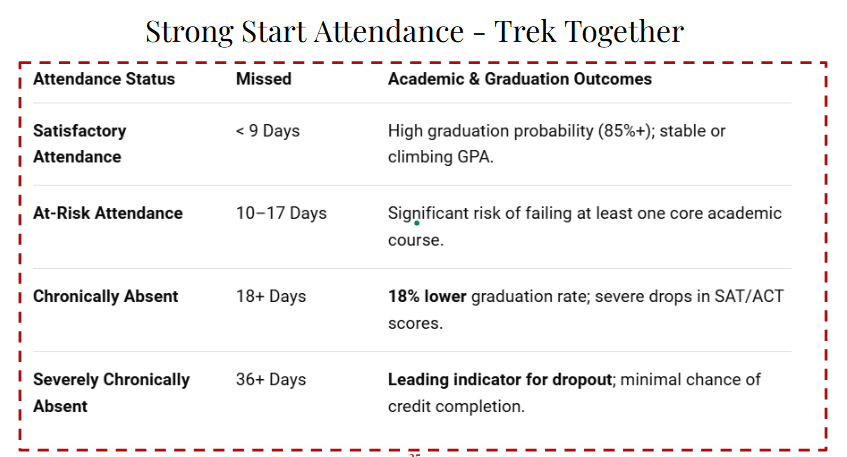
Opportunities for Growth and Reflection: My missed opportunity in this cycle was failing to establish a clearer “why” with my staff regarding these phone calls. While I led a mini-PD around attendance statistics and the critical nature of the first 10 days, I did not invest people emotionally. I should have been more intentional about connecting family outreach to our network-wide Multi-Tiered Student Support (MTSS) initiative, reinforcing that “each child is treated as if he or she is the most important child in the school” (Strike et al., 2019, p. 62). Additionally, I did not fully set up our newest teachers for success, as they needed a practice clinic on making family phone calls. Addressing this requires coaching grade-level leads to facilitate these clinics in team meetings, such as tailoring talking points for 9th versus 11th grade, and establishing manageable outreach structures (e.g., making 4 calls per week rather than 17 per month).
As I transition into a principal role, I recognize that the scope of management is far broader than I previously experienced
Evolution of Understanding: As I transition into a principal role, I recognize that the scope of management is far broader than I previously experienced. Consequently, I must develop stronger accountability systems, specifically bright-lining when expectations are met. Strike et al. (2019) note that Total Quality Management includes “change agency, teamwork, continuous improvement, trust building, and eradication of short term goals” (p. 124). Furthermore, I need to triangulate data more effectively when telling a story, asking: What am I asking people to do? What is similar or different? How are these systems connected? Triangulating data and grounding purpose in the student experience ensures that administrative requirements read as meaningful goals rather than isolated compliance tasks.
Fostering Future Competencies: To continue demonstrating the work ethic required for high levels of organizational performance and promoting each student’s academic success and well-being, I am committed to the following actions:
- Capacity Building for Middle Leaders: I will partner with grade-level leads to facilitate practice clinics for new teachers on family outreach, empowering them to run localized data-driven conversations that make attendance calls manageable and sustainable.
- Data Triangulation & System Transparency: I will collaborate with the leadership team to integrate attendance tracking directly into our MTSS behavioral and academic data streams, ensuring our Qualtrics and Google Sheets tools tell a clear, human-centered story rather than functioning as a checklist.
- Sustainable Accountability & Management: I will continue refining our team workflows and attendance meeting cadences to balance high support with high accountability, ensuring systems remain manageable for staff while maintaining high organizational performance, acknowledging that “the differences between leaders and managers should be acknowledged and their responsibilities in the workplace should be aligned accordingly” (Strike et al., 2019, p. 140)
References:
Strike, K.T., Sims, P.A., Mann, S.L., and Wilhite, R.K. (2019). Transforming professional practice: A framework for effective leadership. 2nd ed. Rowman and Littlefield.


Leave a comment